


An A-Luring- Craft: The Iconic Carolina Shad Boat
I remember when I was a boy, I used to fold sheets of paper into small boats, many of which I fashioned with small paper sails. I would manufacture fleets of these small sailing craft and launch them in the surrounding puddles, ditches, and creeks. I imagine this was a common practice among boys who lived around the shores of the Albemarle Sound.
Boats of various designs were just about the only means of transportation in the small farms and communities of the Albemarle Sound for more than 150 years. Our ancestors have been fishing the Albemarle Sound and reaping the benefits of our extraordinary fishery for the last 350 years. The primary workboats from the 1600s to the mid-19th century were called kunnars. The Kunner was a large dugout canoe, usually about 15 feet long, made from the enormous white cedar and juniper trees abundant in this area at that time. The Kunner was a versatile watercraft, allowing paddling, poling, or a small sail. In addition to the simple dugout canoes, larger, two-masted boats known as periaugers were commonly used for transportation and fishing. As large, suitable trees became harder to find for dugout construction and the demand for larger catches increased, these canoes were largely replaced by planked, sail-powered, shallow-draft boats.
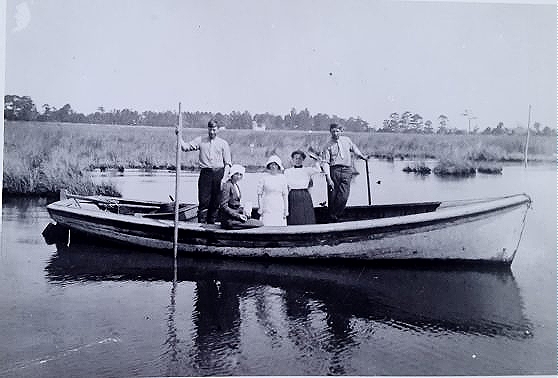
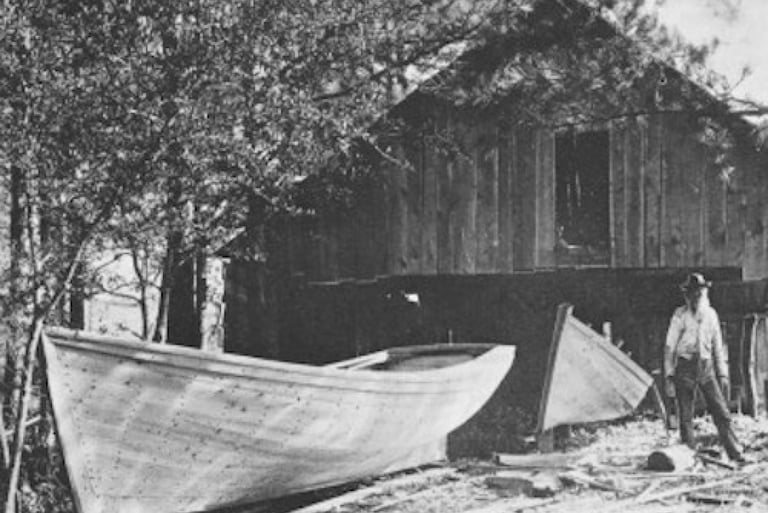
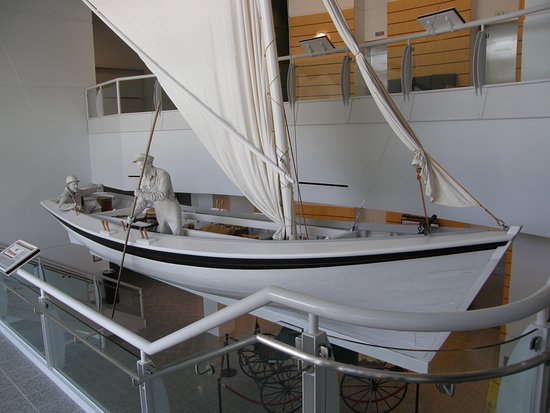
The shad boat replaced the log canoe late in the 19th century, offering greater stability, higher fish-carrying capacity, and a better design for navigating the shallow sound. The Shad Boat was developed by George Washington Creef about 1878 on Roanoke Island. This boat was designed to handle the challenging waters of the Albemarle Sound and Pamlico Sound. Named for the shad fish it was used to catch. Fishermen on the Albemarle used it for seine nets, pound nets, and gill nets. The Shad Boat served as an essential transport and workboat, similar to a modern Ford F-150 pickup truck. The Shad boat was crucial for the large-scale shad fisheries that helped North Carolina recover economically after the Civil War. Production slowed and ended by the 1930s due to high costs, and was replaced by engine-powered boats, though they remained in use for decades.
The Shad Boat became an iconic symbol of Eastern NC's maritime culture and the lives of watermen. Its innovative features and construction influenced later boat designs. Originally built from native Atlantic white cedar (juniper), utilizing roots and stumps for curved frames, making them lightweight and rot-resistant. Early designs had a round bottom for stability in choppy waves, a deep V-bow, and a high stern for nets. The defining feature is its keel, built from a hollowed-out log or root (often white cedar), which is then planked with frames, creating a strong, distinctive shape unlike conventional boats. It functions like a flats boat in shallows but can handle rougher conditions in open bays, a rare combination. Unlike deep-V boats designed for offshore chop, the shad boat excels in shallow, protected sounds while still being capable of handling wind shifts and waves. Its construction blends traditional dugout-style keels with plank-on-frame, a unique "intellectual leap" by creator George Washington Creef, setting it apart from mass-produced designs. The Shad Boat was originally powered by three sails (main, jib, topsail), offering great control and power across a wide range of wind conditions; later versions added a V-bottom for engines.
The Shad boat is an integral part of our heritage here in North Carolina. There are two locations where you will find this one-of-a-kind boat. The Roanoke Lighthouse and Museum, located in the western end of the Albemarle Sound, has the Shad boat on display at:
Roanoke Lighthouse and museum
215 W Water St, Plymouth, NC 27962
(252) 217-2204
There is also a North Carolina Shad Boat on display on the eastern end of the Albemarle Sound at:
Museum of the Albemarle
501 S Water St, Elizabeth City, NC 27909
Phone: (252) 335-1453
I have been to both of these museums, and they are well worth the time and effort to visit. Take the time to drop into either of these two locations and enjoy a wonderful journey into your past.

Contact
Charles E Alexander Jr
chuck@soundsidemagazine.com
(252) 370-5042
© 2025. All rights reserved.