
The Journey Home: Reconnecting with Your Deeper Self
The month of March is a very "Celtic" month. From "Groundhog Day", which the Celts observe as "Imbolc", to "St Patrick's Day", this is the time of year when the world sheds its dreary brown and grey winter coat, and bursts into a thousand shades of Ireland's beloved green. The Celts love to tell stories. My father, being of Gaelic Scottish descent, and my mother, being of Irish descent, it is no wonder that I, too, love to tell stories, and so I will begin with this one.
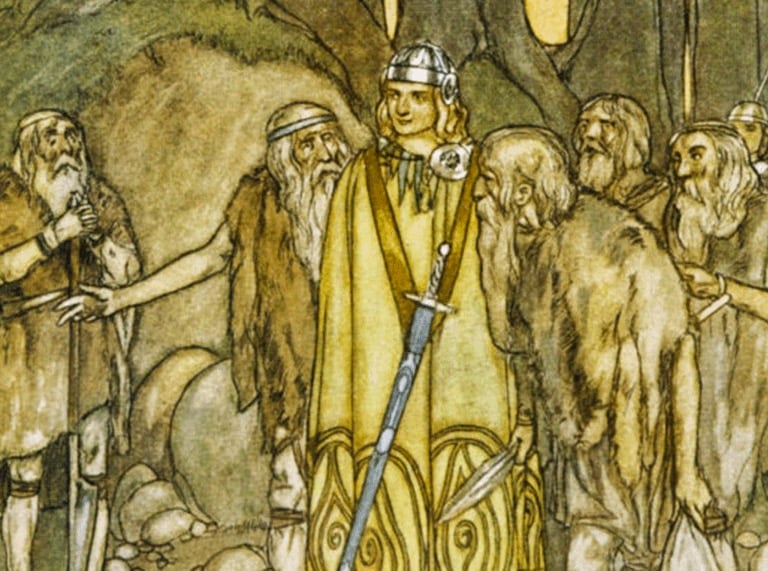
Before the Irish people arrived in Ireland, a race of fairy people called the Tuatha Dé Danann lived there. During this time, a warrior named Conán was sent on a mission into the cities of Falias, Gorias, Findias, and Murias, located in the wild and unfamiliar territory of the land of Down. His mission was to collect four magical treasures: the Lia Fáil (Stone of Fál) from Falias, which would roar under the rightful High King; the Spear of Lugh from Gorias, an unstoppable weapon ensuring victory in battle; the Sword of Nuada (Claidheamh Solais) from Findias, a radiant sword from which no one could escape; and Dagda's Cauldron (Cauldron of Plenty) from Murias, which provided endless food. As soon as he acquired these treasures, Conán was to return with them immediately to his king.
Once Conán had completed his task, he realized the load was surprisingly heavy. Needing help to carry them home, he decided to seek out people who were not only brave and strong but also happy and content within themselves, as the journey back to his king would be particularly long and difficult.
So Conán went about the land, seeking a tribe that could help him. These people happily assumed their roles and, along the way, sang the ancient songs of their ancestors. These were happy people. Every day they traveled, ate, and went about their roles. On the second day, they ate and continued their journey. The third morning was the same, then the fourth, then the fifth. By now, this group had left their tribal land and entered new lands. The vegetation, animals, and topography were different. Yet these people were still singing their songs, carrying their ancestors with them, because their ancestors were in their songs.
After two and a half moons, they had made great progress. Then one morning, having eaten, they didn't happily continue on the journey. Instead, they seemed to sink into some kind of deep trance. Conán grew impatient, then he grew angry, pulled out his sword, and threatened the people. It made no impression on these people, who had fallen deep into a trance. Eventually, Conán sat down beside an elder from the group named Ógma. He candidly said, "Ógma, look what's going on! We were making such great progress, now look what's happening." It took a long time for Ógma to come into a sense of his own hands, his own feet, his own identity. Finally, he emerged into a sense of who he was, and he turned to Conán and said, "We have moved so far so fast during these last two and a half moons that we must now sit down and wait for our souls to catch up."
I deeply connect with this story because, in truth, people can journey so far, so fast, that they outrun their souls and forget who they are. My own ancestors originated in Ireland. Some of them came directly from Ireland to America, and others journeyed to Scotland for a thousand years before continuing to America. My ancestors traveled so far, so fast, that they outran their very souls. In 2015, I returned to Edenton to help my aging father. Arriving back home, I felt disconnected, I too, was in a kind of trance, not knowing who I was, so I paused to reflect and reconnect with my ancestral past. Over the last ten years, I've explored my heritage, reconnecting with their culture, music, stories, and language, gaining a peace along the way that is difficult to explain and a clarity about what's truly important.
I have discovered a new way to look at the world around me; The wolf becomes 'mac tíre', which means 'son of the land', a Lady Bug becomes 'Bó beag Dé', which means 'God's little cow', and a choppy Atlantic Ocean under puffy white clouds becomes "Tá gairdín an iascaire faoi bhláthanna bána", which translates to "The fisherman's garden is under white flowers." Learning the language of my ancestors and where they came from opens my eyes, beyond the obvious, into an otherwise invisible world. The end of my journey has brought me back to the place where I began, and finally, I feel like my soul has caught up with me.
Fáilte romhat, a Charlie, tá tú sa bhaile.

Contact
Charles E Alexander Jr
chuck@soundsidemagazine.com
(252) 370-5042
© 2025. All rights reserved.